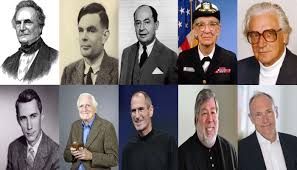
When I think about the digital world we live in today, I can’t help but marvel at the brilliant minds behind it all. Famous software engineers have shaped the way I work, connect, and even relax. Their creations power everything from the apps on my phone to the systems that run entire cities.
I find their stories inspiring because they prove that one good idea—paired with a lot of determination—can change the world. These engineers didn’t just write code; they solved problems and sparked revolutions in technology. As I look closer at their journeys, I see how their passion and innovation continue to influence my daily life.
What Makes a Software Engineer Famous
Fame among software engineers connects to measurable achievements and lasting influence. I notice several vectors that amplify recognition in the field.
Innovative Real-World Solutions
Developing groundbreaking technologies or platforms leads to widespread industry recognition. Notable instances include Tim Berners-Lee with the World Wide Web and Linus Torvalds with Linux.
Scalable Impact
Creating tools or algorithms that reach millions attracts significant attention. For example, Mark Zuckerberg co-founded Facebook, serving billions globally.
Open Source Leadership
Contributing to projects with accessible source code accelerates fame. Engineers like Guido van Rossum, creator of Python, built reputations through community-driven software.
Entrepreneurial Achievement
Founding influential tech companies strengthens visibility. Elon Musk shaped digital payments by co-developing PayPal, changing fintech.
Academic and Technical Recognition
Earning patents, publishing widely cited papers, or receiving awards such as the Turing Award elevates status. Donald Knuth gained acclaim for work on algorithms and code analysis.
Key Contributions of Famous Software Engineers
Name
Primary Field
Notable Achievement
Estimated Users/Reach
Linus Torvalds
Operating Systems
Created Linux kernel
2 billion+ devices
Margaret Hamilton
Aerospace Software
Apollo Mission Software
NASA (global)
Brendan Eich
Web Development
Created JavaScript
98% of all websites
Mark Zuckerberg
Social Networking
Co-founded Facebook
3 billion users/month
Grace Hopper
Programming Languages
Developed COBOL, compilers
Worldwide enterprise
Software Engineers and Casino Technology
Casino platforms depend on robust, fair, and secure software, with specialized engineers shaping the experience.
Random Number Generation (RNG) Experts
Engineering truly random and auditable RNGs remains vital for virtual slot machines and digital roulette. John von Neumann, early RNG pioneer, influenced casino randomness.
Game Design Algorithms
Developers of blackjack, poker, and slot game software need expertise in mathematics, graphics, and compliance. Notable companies like IGT and Microgaming employ highly skilled engineers for these systems.
Casino Software Entity
Area of Contribution
Impacted Platforms
Notable Feature
John von Neumann
Randomization Theory
Slot machines, RNG engines
Provably fair algorithms
Microgaming
Casino Platforms
Online slots, table games
Large game portfolio
NetEnt
Game Development
Virtual roulette, blackjack
Advanced graphics
Crafting scalable and innovative casino technology brings software engineers unique recognition, especially where security and fairness are publicly verified.
Pioneers of the Software Industry
I see pioneers in the software industry who’ve shaped technology with innovations that set new standards for reliability, usability, and scale. Their contributions penetrate fields from operating systems to casino security, consistently redefining what’s possible.
Grace Hopper: The Queen of Code
Grace Hopper established core concepts that define modern software. She developed the first compiler for computer languages, leading to COBOL, a standard in business computing since the 1960s. I recognize her for popularizing the idea of machine-independent programming languages, accelerating technology’s reach in finance, defense, and government. Hopper’s advocacy for accessible software ensured that complex computation became approachable for millions.
Achievement
Year
Impact Area
First Compiler
1952
Software Development
COBOL Development
1959
Business and Government Software
Linus Torvalds: Father of Linux
Linus Torvalds authored the Linux kernel in 1991, launching a global push toward open-source systems. His approach empowered developers to collaborate at scale, resulting in platforms now running most web servers, supercomputers, and cloud infrastructure. I observe enterprises, schools, and casinos relying on Linux for stability and performance. Torvalds’s vision fuels ecosystems supporting millions of applications.
System Derived from Linux
Use Cases
Android
Mobile Devices, Casinos, Kiosks
Ubuntu
Servers, Desktops, Casino Terminals
Red Hat Enterprise Linux
Data Centers, Gaming Servers
Margaret Hamilton: Apollo Mission Innovator
Margaret Hamilton engineered the onboard flight software for NASA’s Apollo missions, introducing priority scheduling and rigorous testing into real-time systems. I credit her code for enabling human lunar landing, with techniques applied today in aerospace, banking, and casino automation. Her concept of “software engineering” formalized the discipline, reinforcing safety and precision as industry standards.
Contribution
Context
Extended Application
Priority Scheduling & Testing
Apollo Guidance Computer
Casino Automated Controls
Don Johnson: Software Engineering in Casino Security
Don Johnson’s application of software engineering to casino security set precedents in fraud detection and advantage play mitigation. Through advanced data modeling, I see how his algorithms analyze player patterns, automate risk assessment, and enhance real-time surveillance. Casinos such as those on the Las Vegas Strip deploy similar solutions, relying on engineered systems to secure operations and uphold fairness.
Field
Software Solution
Casino Example
Security
Real-time Fraud Analytics
MGM Grand, Caesars Palace
Game Integrity
RNG Audits
Wynn Resorts, Venetian
Player Management
Data Pattern Recognition
Bellagio, Aria
Modern Legends in Software Engineering
I highlight software engineers who’ve driven large-scale digital disruption and pioneered transformative platforms. Each modern legend blends engineering excellence with global impact.
Mark Zuckerberg: Building Facebook
I recognize Mark Zuckerberg for co-founding Facebook in 2004 at Harvard. Zuckerberg scaled Facebook into a platform reaching over 2.9 billion active monthly users by 2024 (Meta, 2024). His approach introduced widespread social networking, API-based app integrations, and advanced machine learning for news feed personalization. Data privacy frameworks, such as the introduction of “privacy check-up” tools, show continued evolution under his tenure.
Key Facebook Engineering Milestones
Year
Milestone
Description
2004
Facebook launched
Harvard campus network scales globally
2007
Facebook Platform API
Third-party developers and apps
2012
IPO & mobile-first redesign
Mobile surpasses desktop traffic
2018
Data privacy overhaul
GDPR compliance, privacy controls
Elon Musk: Engineering for the Future
I view Elon Musk as a polymath pushing the boundaries of software and hardware integration. As CEO of SpaceX and Tesla, Musk drives software-defined autonomous vehicles, reusable rocket navigation systems, and scalable energy management algorithms. Neuralink’s brain-computer interfacing and OpenAI’s early advancements highlight Musk’s influence beyond transportation.
Tesla Autopilot uses real-time object detection and predictive route models, enabled by continuous over-the-air updates. SpaceX’s Falcon rockets rely on custom flight software for autonomous landings, validated by over 180 successful launches by 2024 (SpaceX, 2024).
Industries Transformed by Musk’s Engineering
Company
Core Software Innovation
Industry Impact
Tesla
Autopilot, OTA updates
Automotive
SpaceX
Rocket landing algorithms
Aerospace
Neuralink
Brain-computer interface SW
Biotech
OpenAI*
Deep learning R&D
AI Research
Jeff Dean: Google’s Mastermind
I consider Jeff Dean a core architect behind Google’s reliability and speed. Dean co-designed the MapReduce framework, enabling scalable big data processing. He led TensorFlow, now the world’s most-used open-source machine learning system, deployed in image recognition and language modeling. Dean’s work underpins Google search ranking, ad delivery, and YouTube content recommendation.
Dean’s influence extends to next-gen AI, with Google Brain and Gemini (large language models) in active deployment. His drive for distributed systems and efficient coding practices shapes backend infrastructure serving over 90% global search market share (Statcounter, 2024).
Google Technologies Influenced by Jeff Dean
Technology
Application Area
Global Reach
MapReduce
Big data, distributed jobs
Petabyte-scale indexing
TensorFlow
ML, AI R&D
Over 175K GitHub repos
Google Brain
Language, vision AI
Backbone of major Google services
Casino Software Engineering: Modern Pioneers
I spotlight engineers transforming digital casinos through secure, fair, and immersive game systems. Software architects at companies like Evolution Gaming, Playtech, and Scientific Games develop advanced random number generators (RNGs), real-time multiplayer engines, and anti-fraud protocols.
Casino platforms use cryptographic RNGs and compliance frameworks, supporting regulatory demands in over 100 jurisdictions worldwide. Live dealer streaming—engineered by casino software legends—enables seamless HD gameplay with real-time interaction.
Year
Milestone
Impact
1994
RNGs in online slots
Ensures fairness, randomness
2003
Live dealer platform
Real-time video, global access
2018
Blockchain audit trails
Increased transparency, security
2023
AI anti-fraud algorithms
Enhanced player protection
Impact of Famous Software Engineers on Technology
Renowned software engineers have transformed technology ecosystems, advancing both global computing standards and industry-specific solutions. Their innovations influence diverse fields like web infrastructure, artificial intelligence, cyber security, and entertainment platforms.
Key Contributions by Famous Engineers
Engineer
Notable Contribution
Sector Impacted
Year(s)
Tim Berners-Lee
Invented World Wide Web
Web, Communication
1990-present
Grace Hopper
Developed the first compiler
Business Computing
1940s-1980s
Linus Torvalds
Created Linux Kernel
Operating Systems, Open-Source
1991-present
Margaret Hamilton
Engineered Apollo Software
Aerospace, Software Safety
1960s-1970s
Jeff Dean
Architected Google Infrastructure
Big Data, Machine Learning
2000s-present
Mark Zuckerberg
Co-Founded Facebook
Social Media, Networks
2004-present
Don Johnson
Innovated Casino Security
Gaming, Data Science
2010s-present
Each engineer on this table introduced a software solution—such as search algorithms, compilers, kernels, and large-scale platforms—that defined new possibilities for technology adoption and digital growth.
Field Advancement Through Open-Source and Standardization
Open-source initiatives, led by innovators like Linus Torvalds, established collaborative software models. Open collaboration encouraged robust security vetting, modular scalability, and community-driven innovation in mainstream technology infrastructures.
Standardization efforts by contributors including Grace Hopper, who developed interoperable business languages like COBOL, provided uniform frameworks for enterprise software. Consistency and regulatory compliance became achievable when developers followed recognized protocols.
Pioneers Driving Entertainment and Social Experiences
Software engineers like Mark Zuckerberg enabled scalable social platforms serving billions. Platforms, such as Facebook or Instagram, use sophisticated codebases and real-time data processing to create intuitive, connected experiences that shape daily social behavior.
Major advances in infrastructure design by Jeff Dean at Google support search, data analytics, and artificial intelligence. Data centers and distributed algorithms, such as MapReduce or TensorFlow, allow businesses to mine big data, optimize advertising, and automate learning systems worldwide.
Casino Technology: Security, Fairness, and Experience
Casino technology innovations, led by dedicated engineers like Don Johnson, integrate advanced random number generation, machine learning detection, and player-centric digital environments. The following table lists influential software solutions and their impact on casino gaming.
Solution/Engineer
Function
Casino Application
Random Number Generators
Ensures Unpredictable Game Results
Slot Machines, Digital Roulette
Fraud Detection Algorithms
Prevents Cheating and Collusion
Table Game Monitoring, Online Casinos
Advanced UI/UX Systems
Delivers Immersive Game Environments
Virtual Poker Tables, Themed Slots
Don Johnson
Data Modeling for Secure Gaming
Casino Floor Analytics, Surveillance
These casino-specific solutions rely on secure code, rigorous validation, and rapid response algorithms. Fair play, regulatory compliance, and customer trust depend on these innovations.
Influence on Specialized Sectors
Famous software engineers impact specialized verticals—including transportation, healthcare, finance, and gaming—through scalable software deployments. Data privacy, processing efficiency, and real-time analytics define key vectors that shape stakeholder experience and market evolution.
Lessons Learned from Their Careers
Common Traits Among Famous Software Engineers
I see these shared characteristics across renowned software engineers:
Visionary mindset: Engineers like Tim Berners-Lee identify gaps, then build foundational technologies such as the World Wide Web.
Persistence and adaptability: Examples like Linus Torvalds show how evolving goals and ongoing iteration drive major projects such as Linux.
Commitment to openness: Contributors including Jeff Dean promote knowledge sharing through open-source projects, ensuring scalable solutions.
Multidisciplinary skills: Engineers, following Margaret Hamilton’s approach, blend technical and domain expertise to navigate and solve complex problems in sectors like aerospace or healthcare.
User-focused design: Developers such as Mark Zuckerberg prioritize intuitive and accessible experiences, attracting billions of global users.
Impact of Leadership Style
Leadership style directly shapes outcomes in software engineering careers:
Engineer
Leadership Trait
Resulting Impact
Grace Hopper
Collaborative mentoring
Developed COBOL, enabling business software
Elon Musk
High-risk innovation
Advanced industries like automotive, space
Linus Torvalds
Decentralized stewardship
Enabled worldwide open-source contributions
Engineers who lead by inclusion, vision, or direct authority reshape teams and technology outcomes, which multiplies their influence across industries.
Casino Software Engineering: Security and Fairness
Casino-focused software engineers consistently emphasize robust security and fairness in their products:
Focus Area
Implementation Example
Industry Benefit
Random number generation
Secure PRNG in slot machines
Ensures unbiased outcomes
Fraud detection algorithms
Don Johnson’s data modeling
Reduces scam risk
Real-time analytics
Casino platform user monitoring
Improves regulatory compliance
Engineers who specialize in casino technology create frameworks that ensure every game remains fair and every transaction safe, fostering player trust and regulatory adherence.
Milestones Driving Software Ecosystems
Career-driven innovations from these engineers set benchmarks for software ecosystems:
Milestone
Engineer
Ecosystem Outcome
Compiler invention
Grace Hopper
Simplified software development
Open-source kernel
Linus Torvalds
Global Linux adoption
MapReduce & TensorFlow
Jeff Dean
Breakthroughs in data analytics
Social media platform
Mark Zuckerberg
Redefined digital communication
Transformative milestones, achieved by industry leaders, anchor emerging standards, fuel downstream innovation, and reinforce best practices within diverse tech communities.
Applying Their Lessons Today
Applying career lessons from iconic software engineers:
Focusing on scalable impact, as seen with Linux and TensorFlow, accelerates technology adoption in both general and specialized industries.
Building secure, transparent systems, like those in regulated casino settings, increases user confidence and market integrity.
Maintaining cross-disciplinary fluency allows fast adaptation, helping engineers drive and withstand rapid shifts in technology.
These recurring vectors—vision, openness, adaptability, and sector-specific focus—remain vital for anyone aiming to influence software engineering at scale.
Conclusion
Reflecting on the journeys of these famous software engineers always leaves me inspired. Their breakthroughs have not only shaped the digital world but have also set new standards for what’s possible across countless industries.
I find that their stories remind us of the power of innovative thinking and relentless curiosity. As technology keeps evolving I’m excited to see how the next generation of engineers will build on this incredible legacy and continue transforming the world around us.
No responses yet