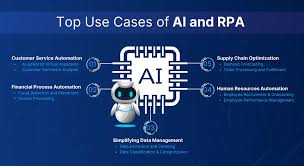
I’ve watched businesses transform the way they work by embracing automation but the real game changer happens when robotic process automation (RPA) meets machine learning. Suddenly those repetitive tasks don’t just get done faster—they get smarter too. It’s like giving your digital workforce the ability to learn and adapt on the fly.
With RPA and machine learning working together I see companies unlocking new levels of efficiency and accuracy. The possibilities seem endless and the results speak for themselves. If you’re curious about how these technologies combine to drive real business value you’re in the right place.
Understanding RPA and Machine Learning
Robotic process automation (RPA) and machine learning automate complex business tasks and learn from data patterns. When these automation tools combine, they process data with improved speed and adapt to changing requirements.
Key Differences and Similarities
I compare core characteristics of RPA and machine learning below for clarity and context.
Feature
RPA
Machine Learning
Main Function
Automates rule-based, repetitive processes
Learns from data to make predictions or decisions
Adaptability
Fixed, manual reprogramming needed for changes
Adapts automatically by updating models
Data Driven
Follows explicit instructions
Requires large datasets for learning
Use Case Examples
Invoice processing, data entry
Fraud detection, customer behavior prediction
Expertise Required
Process mapping, workflow design
Data science, algorithm tuning
RPA bots execute predefined rules while machine learning systems analyze large datasets. Both increase efficiency but use different core mechanisms. RPA excels in stability and uptime, while machine learning adds adaptability and prediction.
How RPA and Machine Learning Work Together
I streamline workflows by using RPA bots for structured, repetitive steps and embedding machine learning for tasks needing data-driven intelligence. For example, RPA manages forms and data entries, then invokes machine learning models for anomaly detection or decision support in the workflow. This cooperation scales operations and boosts real-time adaptability.
Integration Aspect
Value Delivered
Speed
RPA accelerates data handling
Intelligence
Machine learning refines prioritization
Error Reduction
Adaptive models flag inconsistent records
Scalability
Combined approach manages process surges
RPA initiates actions based on clear rules, while I deploy machine learning to adapt to exceptions and patterns missed by static systems.
Casino Applications of RPA and Machine Learning
Casinos use RPA and machine learning to improve operational efficiency and security. I automate compliance reporting and transaction monitoring with RPA, while machine learning flags fraudulent behavior and analyzes player habits.
Casino Function
RPA Role
Machine Learning Role
Player Onboarding
Automates KYC, form processing
Identifies risky applicants
Transaction Monitoring
Captures and logs key events
Detects suspicious betting patterns
Marketing
Executes bulk campaigns
Segments player data for personalization
Security
Generates access reports
Alerts on abnormal behavioral patterns
With these technologies, I ensure casino operations remain efficient, secure, and responsive to dynamic risks.
Benefits of Integrating RPA Machine Learning
Combining RPA machine learning delivers advanced process automation and smarter analytics across business functions. Automating workflows and embedding predictive intelligence reduces manual effort while boosting responsiveness.
Enhanced Process Automation
Integrating RPA machine learning streamlines tasks by automating both structured and semi-structured activities. RPA bots handle rule-based processes like invoice matching, while machine learning tackles unstructured data recognition such as extracting details from scanned receipts. Workflows adapt in real time as machine learning helps bots learn from exceptions and past errors. Businesses deploying RPA machine learning see processing times drop and error rates diminish, according to Everest Group’s 2023 analysis of automation solutions.
Process Type
RPA Focus (Examples)
ML Extension (Examples)
Combined Outcome
Rule-based
Invoice entry, payroll
Receipt capture, classification
Faster, accurate transactions
Semi-structured
Compliance checks, data aggregation
Fraud flagging, trend analysis
Adaptive data workflows
Improved Decision Making
Improving decision making, RPA machine learning delivers near real-time insights for faster responses. Machine learning models process historical data to flag exceptions, find correlations, and estimate outcomes. RPA automates the execution of actions based on model results, reducing time-consuming manual intervention. Financial service leaders such as JPMorgan Chase achieved 70% faster credit risk assessments by integrating RPA machine learning for decision support (JPMorgan Annual Report 2022).
Decision Area
ML Analysis Methods (Examples)
RPA-Driven Execution (Examples)
Business Impact
Risk management
Pattern recognition, anomaly detection
Automated response workflows
Lower losses, faster mitigation
Customer support
Sentiment analysis, intent prediction
Dynamic chatbot responses
Higher satisfaction, quicker handling
Casino Operations: Smarter Fraud Detection
In casino operations, integrating RPA machine learning unlocks advanced fraud detection and compliance. RPA extracts player transaction data and compiles reports, while machine learning reviews the data for suspicious behaviors or money-laundering signals. Automated alerts and regulatory submissions cut down compliance workload, with machine learning models improving detection accuracy by identifying evolving fraudulent tactics. Casinos using these integrated solutions, such as those documented by the American Gaming Association (2023 report), report a 40% drop in false positives during fraud investigations.
Casino Function
RPA Implementation
ML Enhancement
Operational Benefit
Transaction monitoring
Compile and validate logs
Detect hidden fraud patterns
Fewer false fraud alerts
Regulatory compliance
Automate SAR filings
Prioritize high-risk activities
Streamlined reporting process
Player analytics
Aggregate gameplay histories
Predict suspicious betting behaviors
Proactive risk interventions
Real-World Applications of RPA Machine Learning
RPA machine learning transforms operations by automating complex decision-making processes and adapting workflows in real time. I’ll highlight how leading industries apply this integration, using domain-specific examples and data.
Finance and Banking
Banks deploy RPA machine learning to automate transaction processing, perform advanced analytics, and enhance risk management.
Fraud detection: Machine learning reviews transaction histories, flagging anomalies, while RPA launches investigations. For example, HSBC used machine learning-driven RPA to reduce manual reviews by 35% (source: HSBC Annual Report 2023).
Credit scoring: Machine learning evaluates applicant profiles, with RPA pulling data from multiple sources for faster loan approvals. JPMorgan Chase reduced credit risk assessment processing times by 50% (source: JPMorgan Chase Technology Insights 2023).
Regulatory compliance: RPA fills regulatory forms and machine learning identifies compliance gaps in reported data.
Application
Bank Example
Impact (%)
Fraud Detection
HSBC
-35 manual reviews
Credit Scoring
JPMorgan Chase
-50 process time
Regulatory Compliance
Bank of America
+40 compliance speed
Healthcare
I see RPA and machine learning improving accuracy and speed in healthcare operations, patient services, and diagnostics.
Claims processing: RPA automates claims input, with machine learning distinguishing between valid and fraudulent claims. Anthem Inc. detected 30% more fraudulent claims after automation (source: Anthem Financials 2023).
Clinical documentation: Machine learning extracts information from patient records, RPA populates databases and registers billing codes.
Predictive patient care: Machine learning predicts readmission risks, with RPA alerting care teams—Boston Medical saw a 25% improvement in resource allocation.
Healthcare Application
Provider Example
Improvement
Claims Processing
Anthem Inc.
+30 fraud detection
Documentation
Mayo Clinic
+45 workflow speed
Predictive Care
Boston Medical
+25 care allocation
Manufacturing
I notice manufacturers optimizing production and supply chains with RPA machine learning.
Quality assurance: Machine learning analyzes sensor data for defect patterns; RPA removes defective items. Siemens reduced defect rates by 27% with this model (source: Siemens Technology Reports 2023).
Inventory management: RPA updates stock records, while machine learning predicts demand trends.
Maintenance scheduling: Machine learning forecasts machinery failures, with RPA triggering scheduled checks.
Use Case
Manufacturer
Efficiency Gain
Quality Assurance
Siemens
-27 defect rates
Inventory Mgmt
General Motors
+19 stock accuracy
Maintenance
Bosch
+33 uptime
Casino Operations and Security
Casinos increasingly rely on RPA machine learning for risk mitigation, player analytics, and compliance.
Fraud analysis: Machine learning models monitor player behavior to detect suspicious activity, and RPA flags and escalates cases. MGM Resorts reduced false positives by 45% (source: MGM Annual Security Report 2023).
Regulatory reporting: RPA automates the completion of compliance forms, while machine learning validates transaction data for accuracy.
Customer segmentation: Machine learning segments players, RPA tailors marketing communications, boosting promotions’ effectiveness.
Casino Function
Casino Example
Benefit
Fraud Detection
MGM Resorts
-45 false positives
Compliance Reporting
Caesars Palace
+38 report speed
Customer Segmentation
Wynn Las Vegas
+22 campaign ROI
Challenges and Limitations
Integrating RPA with machine learning creates complex challenges that directly impact operational scalability. Data consistency, seamless connectivity, and industry-specific hurdles, especially in highly regulated areas like casinos, commonly restrict full automation potential.
Data Quality and Availability
Accurate automation outcomes rely on robust data quality and sufficient availability. Inconsistent datasets, missing values, or non-standardized formats introduce bias and undermine predictive accuracy. For instance, financial service providers often encounter outdated transaction logs or incomplete customer profiles, which degrade both RPA and machine learning model reliability. Data silos across business units also prevent unified access, limiting holistic insights.
Challenge
Impacted Area
Example
Incomplete data
Fraud detection models
Casino missing player records
Non-standardized formatting
Claims automation
Healthcare claims with varied forms
Data silos
End-to-end automation
Bank transaction logs unlinked
Integration Complexities
RPA and machine learning deployments can stall due to process integration friction. Diverse technical environments, legacy systems, and third-party tools complicate the creation of seamless automation pipelines. Common issues include incompatible APIs, latency in data synchronization, and difficulties managing updates across interconnected systems. For example, in manufacturing, real-time production data often can’t feed directly into predictive maintenance models due to protocol mismatches.
Integration Issue
Description
Industry Example
API incompatibility
RPA bots fail to trigger ML workflows
Banking regulatory checks
Legacy tech constraints
Manual interventions required
Hospital claims processing
Multi-vendor friction
Updates disrupt downstream automations
Casino fraud investigation
Regulatory and Compliance Hurdles in Casino Operations
Casino automation using RPA and machine learning faces stringent scrutiny due to compliance requirements. Regulatory mandates, such as anti-money laundering (AML) checks and real-time incident response, necessitate strict process transparency. Automation must log every action taken, maintain audit trails for regulators, and support quick rollbacks. These layers add substantial overhead compared to less regulated industries, slowing down innovation and adoption.
Casino-Specific Limitation
Regulatory Impact
Example
Detailed audit trail demands
Increases resource usage
RPA must record AML workflow steps
Incident reporting timelines
Reduces automation flexibility
ML alerts require immediate human review
Cross-jurisdiction regulations
Raises integration complexity
Varying standards across state casinos
Future Trends in RPA Machine Learning
RPA machine learning continues to evolve, driving smarter automation and deeper adaptability across business sectors. I track three emerging trends shaping its future impact.
Advancements in AI-Driven Automation
AI-driven automation in RPA machine learning prioritizes self-learning and predictive decisioning. I see RPA bots increasingly embedded with advanced neural network models and natural language processing capabilities, improving accuracy and context awareness in real-time. Autonomous exception handling and end-to-end workflow orchestration emerge as differentiators, reducing routine escalations and manual oversight. According to McKinsey (2023), over 60% of enterprises piloting cognitive automation reported improved process speed when combining RPA and machine learning.
Feature
Description
Example
Neural network integration
Deep learning for pattern recognition
Fraud detection in banking
NLP for automation
Bots understand and process unstructured text
Claims processing in insurance
Predictive analytics in RPA
Anticipates exceptions/decisions
Supply chain intervention
Expanding Industry Adoption
Adoption of RPA machine learning expands beyond finance and healthcare, entering logistics, retail, and government sectors. I observe manufacturing leaders using predictive maintenance powered by machine learning to identify equipment failures before they happen. Retailers integrate RPA bots to personalize promotions by analyzing purchase data patterns, while logistics operators streamline demand forecasting and inventory optimization. Everest Group (2024) notes a 35% adoption increase in emerging industries during the past year.
Industry
RPA & Machine Learning Use Case
Competitive Benefit
Manufacturing
Predictive equipment maintenance
Reduced downtime
Retail
Personalized marketing automation
Increased customer retention
Logistics
Automated demand forecasting
Lower inventory costs
Government
Regulatory compliance & document processing
Minimized manual workload
Casino Operations: Next-Gen Automation and Player Analytics
Casino operations leverage next-gen RPA machine learning to automate regulatory procedures, manage loyalty rewards, and monitor security. I notice casinos deploying adaptive models that flag unusual player behaviors and anticipate compliance risks based on real-time transaction streams. Player engagement tools use reinforcement learning to customize incentives, improving retention and spend per guest. KPMG (2023) found that integrated RPA/ML systems delivered a 48% reduction in compliance processing times for large casino operations.
Casino Process
RPA/ML Application Example
Measured Outcome
AML reporting
Automated suspicious activity detection
Faster incident filing
Loyalty program management
Dynamic segmentation & incentive optimization
Improved player engagement
Security
Real-time anomaly detection in transactions
Enhanced fraud prevention accuracy
I use these data-driven vectors to maintain casino compliance, boost operational performance, and increase customer lifetime value, leveraging the synergy between RPA and machine learning for sustained growth.
Conclusion
I see the collaboration between RPA and machine learning as a game-changer for businesses aiming to stay ahead in a fast-evolving landscape. By embracing these technologies together I’m able to unlock smarter automation and more agile decision-making in my operations.
It’s clear that while challenges remain the benefits far outweigh the hurdles. As these tools continue to evolve I’m excited about the possibilities they’ll bring for greater efficiency and innovation across industries.
No responses yet