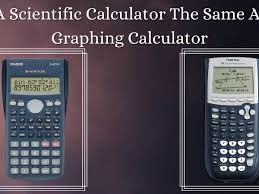
When I first started using calculators for school and work I quickly realized not all calculators are created equal. Scientific and programmable calculators may look similar but they serve very different needs. If you’ve ever wondered why one costs more or what extra features you’re really getting you’re not alone.
Understanding the difference between these two types can save you time and frustration especially when tackling complex math or engineering problems. Whether you’re a student choosing your first calculator or a professional looking for the right tool it’s important to know what sets them apart.
Overview of Calculators: Scientific vs. Programmable
Scientific and programmable calculators carry core differences in design and application scope. Scientific calculators, such as the Casio FX-991EX and Texas Instruments TI-30XS, handle arithmetic, trigonometry, statistics, and logarithms across education and engineering fields. Programmable calculators, like the Texas Instruments TI-84 Plus CE and HP Prime, let me store, modify, and execute custom programs, supporting advanced algorithmic and repetitive computations required in research and technical industries.
Comparative Features Table
Feature
Scientific Calculator
Programmable Calculator
Basic Arithmetic
Yes
Yes
Trigonometric Functions
Yes
Yes
Statistical Operations
Yes
Yes
Programmability
No
Yes
Memory Capacity
Limited (up to 2KB, example: Casio FX-300ES)
Substantial (up to 3MB, example: HP Prime)
Graphing Capabilities
No (unless hybrid model)
Yes (majority support graphing)
Typical Use Cases
High school, engineering, science
Research, computer science, finance
Typical User Scenarios
Scientific calculators suit students in trigonometry or chemistry classes using models like the Sharp EL-W516.
Programmable calculators serve engineers or financial analysts automating calculations for iterative problem sets with devices like the Casio fx-5800P.
Casino Probability Calculations With Calculators
In gaming environments, casino operators and gaming analysts rely on advanced calculator capability for modeling and analyzing probability. I employ programmable calculators to automate simulations and probability calculations, optimizing strategies for casino games like blackjack, roulette, and craps. Scientific calculators can compute combinations or permutations, yet programmable models solve complex Markov chains and run custom statistical scripts required for casino risk analysis.
Key Features of Scientific Calculators
Scientific calculators offer essential functions for handling math and science problems in academic and professional settings. I rely on these tools for quick calculations that don’t need programmability or advanced memory.
Basic Functions and Capabilities
Scientific calculators provide a fixed set of operations found across models like the Casio FX-991EX and Texas Instruments TI-30XS. I use these calculators when I need:
Arithmetic functions (addition, division, multiplication, subtraction)
Trigonometric calculations (sine, cosine, tangent and their inverses)
Exponential and logarithmic functions (base e, base 10, powers and roots)
Statistical operations (mean, standard deviation, regression for small datasets)
Fraction and decimal conversions
Constants (pi, e) and memory for basic results storage
Feature
Scientific Calculator Example
Benefit
Trigonometric Functions
sin, cos, tan keys on TI-30XS
Quick angle calculations
Logarithmic Operations
log, ln buttons on Casio FX-991EX
Fast exponent/log solutions
Statistical Functions
1-variable/2-variable stats on most models
Basic data analysis for homework/lab
No User Programming
Fixed-function keypad
Streamlined, no risk of code errors
Typical Use Cases
Students and professionals use scientific calculators for tasks that require speed and reliability in computation without the need for custom programs. I see them often in:
High school math tests (geometry, trigonometry, algebra)
Chemistry and physics problem solving (concentration, reaction rates)
Quick statistical analysis (means, variances, trend lines during experiments)
Engineering coursework (unit conversions, calculations with scientific notation)
User Group
Application Example
Students
Solving quadratic equations in algebra class
Science professionals
Calculating molar concentrations in chemistry labs
Engineers (entry level)
Determining circuit values in electronics courses
Casino Probability Calculations with Scientific Calculators
In casino settings, I depend on scientific calculators for quick probability checks when programmable models are unavailable. Though they can’t run iterative simulations, these calculators support fast calculations of:
Odds in simple games (roulette probability, basic blackjack outcomes)
Single-step statistical probabilities (binomial probability, expected value)
Example: Calculating the probability of drawing a specific card in poker or quick odds for a specific outcome in roulette by entering factorial expressions and combinations directly.
Casino Calculation
Scientific Calculator Application
Roulette Probability
Entering sectors for single-number chances
Poker Hand Probability
Calculating combinations using factorial function
Blackjack Expected Value
Fast addition/multiplication of possible outcomes
Key Features of Programmable Calculators
Programmable calculators enable me to automate complex tasks and customize computational processes. Compared to scientific calculators, they offer deeper flexibility for technical, academic, and statistical analyses.
Advanced Programming Capabilities
Programmable calculators let me write, store, and execute code using built-in or external programming languages. I can perform multi-step calculations, iterative algorithms, and custom functions that reduce human error in repetitive tasks. For example, I can implement advanced algorithms like Newton-Raphson for equation solving or Monte Carlo simulations for risk analysis.
Programming Features Comparison Table
Feature
Programmable Calculators
Scientific Calculators
Custom Programs
Yes (TI-BASIC, RPN, Python, others)
No
Memory for Programs
50 KB–1 MB (TI-84 Plus CE, HP Prime)
<2 KB
Conditional Logic (IF/ELSE)
Yes
No
Loops and Iteration
Yes
No
Third-Party App Support
Yes (select models)
No
Typical Use Cases
As a user, I rely on programmable calculators for tasks requiring repeated operations, large data sets, or algorithmic computation. These devices support applications in engineering, where matrix calculations and root analysis are common. I also use them in finance for amortization schedules, and in academic research for statistical simulations. For instance, the TI-84 Plus CE runs user-written programs for solving complex integrals that would otherwise demand manual calculation.
Use Case
Examples
Engineering Analysis
Finite element method, signal processing routines
Financial Modeling
Payback period calculation, compound interest tables
Academic Research
Regression analysis, large statistical data set manipulation
Automated Homework Solving
Batch-solving quadratic equations, generating multiple graph plots automatically
Casino Probability Studies with Programmable Calculators
Programmable calculators offer critical support in casino probability research and advantage play strategy modeling. I can design and run simulations for blackjack counting systems, roulette odds, or poker hand frequencies. By inputting complex rules and running iterative probability calculations, I automate thousands of game scenarios to expose long-term outcomes.
Casino Probability Functions Table
Casino Game
Programmable Task
Example Model Implemented
Blackjack
Card counting strategy simulation
Hi-Lo count, probability of bust
Roulette
Bet outcome probability calculations
Sector-based spin simulation
Poker
Hand frequency distribution
Texas Hold’em win rates
Craps
Simulation of house edge on various bets
Line bet and odds combinations
By leveraging these advanced calculator features, I streamline modeling, optimize gameplay, and test mathematical strategies, especially within casino gaming environments.
Major Differences Between Scientific and Programmable Calculators
Scientific and programmable calculators differ in their core functionalities, user interfaces, and target applications. These differences impact how I approach math, engineering, and even probability analysis in casino environments.
Functional Differences
Functional distinctions define what I can achieve with each calculator type. Scientific calculators process direct input for functions like trigonometry, logarithms, and statistics. Programmable calculators let me develop and store custom programs that automate calculations and model algorithms.
Functionality
Scientific Calculator
Programmable Calculator
Basic Arithmetic
Yes
Yes
Trigonometric Functions
Yes
Yes
Exponential/Logarithmic
Yes
Yes
Statistical Analysis
Yes (predefined)
Yes (programmable)
User Programming
No
Yes (customizable)
Graphing Capability
Limited/None
Often included
Memory Size
Small (1–5KB)
Larger (up to 1MB)
Scientific calculators like the Casio FX-991EX offer fixed function sets. Programmable models such as the TI-84 Plus CE let me automate tasks with loops, conditionals, and stored variables—useful for repetitive or complex sequences.
User Experience and Interface
User experiences vary due to interface and input complexity. Scientific calculators have single-line or two-line displays and direct-access keys for each function. Input remains straightforward but limited to what’s pre-installed.
Programmable calculators offer advanced interfaces: larger screens, menus, and button combinations to access custom tools. I navigate program libraries, edit memory, and select between modes. This interface supports graph plotting and running saved scripts.
User Experience Aspect
Scientific Calculator
Programmable Calculator
Display
Single/Double Line
Multi-Line/Color LCD
Input Method
Direct Entry
Direct/Scripted
Learning Curve
Low
Moderate to High
Menu Navigation
Minimal
Extensive
Application in Education and Professions
Applications reflect each calculator’s computational scope. In education, I use scientific calculators for standardized exams, high school courses, and quick on-the-spot math or science work. For example, a student quickly checks a sine value or solves a quadratic equation.
Professionally, programmable calculators support technical requirements. Engineers automate structural analysis, financial analysts run iterative models, and researchers simulate systems. I rely on programmability for custom solutions in advanced fields.
Field or Role
Scientific Calculator Use
Programmable Calculator Use
High School Student
Tests in algebra, geometry, chemistry
N/A or limited
College STEM Courses
Direct physics and calculus calculations
Algorithm development/integral solutions
Engineer
Onsite measurements, conversions
Load calculations, design simulations
Financial Analyst
Interest rate or loan tables
Portfolio modeling, scenario analysis
Casino Statistician
Basic odds and probabilities
Game theory simulation, risk modeling
Use in Casino Probability Calculations
Both calculator types support probability analysis in casinos, but with vastly different capabilities. Scientific calculators handle single-step odds, such as the chance of a specific roulette number or quick blackjack hand. Programmable calculators let me script multi-step models—tracking hands, running Monte Carlo simulations, or optimizing betting systems.
Casino Calculation Type
Scientific Calculator Example
Programmable Calculator Example
Odds for Single Bet
Roulette number probability
Multi-Round Simulation
Blackjack hand simulations
Betting Strategy Optimization
Martingale system programming
Probability Distribution
Binomial for winning odds
Dual deck probability distribution
Statistical Tracking
Single average payout
Running variance analysis per session
By aligning each calculator’s strengths with the task—be it algebra homework or blackjack optimization—I maximize efficiency and precision across math, engineering, and gaming contexts.
Choosing the Right Calculator for Your Needs
Selecting a calculator aligns with task complexity, user experience, and field requirements.
Decision Factors: Scientific vs. Programmable
I determine my ideal calculator by evaluating typical use cases, level of problem complexity, and programming needs. The table below summarizes core factors:
Factor
Scientific Calculator
Programmable Calculator
Intended Users
Students (math sciences)
Engineers, analysts, researchers
Complexity of Tasks
Basic to moderately complex
Complex, iterative, algorithmic
Custom Program Support
None
Yes
Interface Simplicity
Simple keypads, single-line display
Menu-driven, multi-line display
Memory and Storage
Limited
Extensive
Graphing Capabilities
Rare (few models)
Common (advanced models)
Allowed on Standardized Tests
Widely accepted
Restricted/regulated
Matching Calculators with Academic and Professional Scenarios
Task relevance shapes my choice. For routine coursework and exams involving arithmetic, trig, or simple statistics, I use a scientific calculator. For professional projects requiring algorithm design, financial models, or iterative simulations, I rely on programmable options.
Use Case
Scientific Calculator Example
Programmable Calculator Example
High school math
Casio FX-991EX, TI-30XS
N/A
Engineering analysis
N/A
TI-84 Plus CE, HP Prime
Financial modeling
N/A
HP 12C, TI-89 Titanium
Casino probability
Quick odds, single step
Multi-step models, probability scripts
Choosing Calculators for Casino Probability Calculations
Advanced simulations, betting models, and statistical analyses require features that I find only in programmable calculators. For manual odds checks or basic probability, a scientific calculator covers my needs.
Functionality
Scientific Calculator
Programmable Calculator
Simple odds calculations (e.g. roulette)
Yes
Yes
Multi-step betting strategy modeling
No
Yes
Automated probability simulations
No
Yes
Custom casino game scripting
No
Yes
Quick statistical summary
Yes
Yes
Summary Table: When to Use Each Calculator Type
Scenario
Best Calculator Type
Standard school exams
Scientific
Engineering design project
Programmable
One-step casino probability check
Scientific
Casino game modeling or scripting
Programmable
Research paper statistics
Programmable
Choosing a calculator revolves around the complexity of computations, permission restrictions (like exams), and whether custom program automation benefits my math, engineering, or casino applications.
Conclusion
Choosing between a scientific and a programmable calculator really comes down to knowing what you need for your work or studies. I always remind myself that the right tool can make challenging tasks much simpler and more efficient.
Whether you’re tackling basic equations or diving into advanced computations in engineering or casino analysis, understanding these calculators’ strengths helps you stay productive and confident. Matching your calculator to your needs ensures you’re prepared for any problem that comes your way.
No responses yet