When I think about what keeps modern companies running smoothly, business software jumps right to the top of the list. It’s everywhere—from the apps I use to manage emails to the tools that handle payroll and inventory. Without it, even the simplest tasks would turn into a headache.
Business software isn’t just for tech giants or huge corporations. I’ve seen small startups and local shops rely on it to stay organized and competitive. Whether I’m tracking sales or collaborating with a team, the right software saves time and lets me focus on what really matters—growing the business.
Defining Business Software
Business software refers to digital tools designed for automating, managing, and optimizing commercial activities. I use business software to handle data, streamline workflows, and enhance productivity across functions like finance, customer management, and operations. Programs range from simple accounting apps to advanced enterprise resource planning platforms, each tailored to fit specific business sizes and industries.
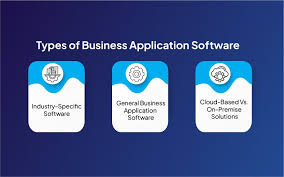
Types of business software include enterprise resource planning, customer relationship management, accounting, payroll, project management, and communication solutions. Examples include platforms like SAP for ERP, Salesforce for CRM, QuickBooks for accounting, and Slack for team communication. Every category addresses unique organizational needs while supporting company-wide efficiency.
Business software features integrate data processing, analytics, security controls, reporting, and workflow automation. These functions help me minimize manual tasks, reduce errors, centralize information, and make data-driven decisions. Cross-platform compatibility, user management, and compliance modules often appear in leading solutions.
Core Business Software Types Table
Software Type
Main Function
Common Example
Typical Users
Accounting
Manage financial transactions
QuickBooks
Bookkeepers
Enterprise Resource Planning (ERP)
Integrate multiple business operations
SAP
Operations managers
Customer Relationship Management (CRM)
Track customer interactions
Salesforce
Sales teams
Payroll
Automate employee payments
ADP
HR professionals
Project Management
Organize and track tasks
Asana
Project managers
Communication
Enable internal discussions
Slack
All employees
Casino Management Software Capabilities
Casino operators rely on specialized business software to handle unique needs like gaming operations, customer rewards, and regulatory compliance. I’ve found these solutions integrate slot management, live game tracking, loyalty programs, and player analytics, supporting secure and efficient floor operations.
Feature
Casino Use Case
Business Benefit
Slot Machine Tracking
Monitor slot revenues
Optimize machine placement
Player Rewards
Manage VIP programs
Increase customer retention
Compliance Reporting
Meet gaming regulations
Reduce legal risks
Live Table Management
Track table games performance
Enhance operational insight
Key Types of Business Software
Key types of business software address specific functions that support daily operations, resource management, and customer engagement. I use the following main categories in most business environments.
Enterprise Resource Planning (ERP)
Enterprise Resource Planning (ERP) software integrates core business processes into a unified system. I manage inventory, procurement, finance, HR, and manufacturing using ERP platforms like SAP, Oracle NetSuite, and Microsoft Dynamics 365. ERP increases cross-department visibility, enforces standard processes, and provides real-time data for decision-making.
ERP Feature
Function
Examples
Typical Industry Users
Integration
Unifies departments and data
SAP, NetSuite
Manufacturing, Retail, Healthcare
Automation
Automates finance, HR, supply chain
SAP, Dynamics 365
Logistics, Energy, Distribution
Analytics
Generates real-time reports/insights
Oracle, Infor
Wholesale, Hospitality
Customer Relationship Management (CRM)
Customer Relationship Management (CRM) software centralizes interaction and sales data. I track customer information, monitor sales activity, automate marketing, and manage support with tools like Salesforce, HubSpot, and Zoho CRM. CRM helps boost sales, improve retention, and increase customer satisfaction through data-driven outreach.
CRM Capability
Primary Use
Common Vendors
Main Business Types
Contact Management
Store customer data
Salesforce, Zoho
Retail, B2B, Service Providers
Lead Tracking
Monitor sales pipeline
HubSpot, Pipedrive
Consulting, Finance, Education
Service Automation
Streamline support tasks
Zendesk, Freshdesk
E-commerce, Telecommunications
Accounting and Finance Software
Accounting and finance software streamlines transactions, budgeting, payroll, and reporting. I record income, track expenses, and automate taxes using solutions such as QuickBooks, Xero, and Sage. This category delivers accuracy, audit trails, and compliance assurance for SMBs and enterprises.
Functionality
Details
Software Examples
User Segments
Invoicing
Create/send invoices, track payment
QuickBooks, Xero
SMEs, Freelancers
Payroll Management
Salary and tax automation
Sage, ADP
HR, Small Businesses
Financial Reporting
Generate statements, analytics
FreshBooks, Oracle
Accountants, Executives
Project Management Tools
Project management tools organize tasks, schedules, and collaboration. I plan resources, assign responsibilities, and monitor project timelines through Asana, Trello, or Jira. These platforms support goal tracking, communication, and efficiency from initiation to delivery.
Tool Purpose
Description
Leading Solutions
Typical Users
Task Management
Assign and track work
Asana, Trello
Agencies, Startups
Timeline Planning
Visualize deadlines and progress
Microsoft Project
Construction, IT Teams
Collaboration
Enable file sharing, chat, comments
Jira, Monday.com
Marketing, Product Teams
Casino Management Software
Casino management software addresses industry-specific needs for gaming operators. I oversee table games, slot machines, player tracking, reward programs, compliance, and reporting through platforms like IGT ADVANTAGE, CasinoTrac, and Bally Systems. These systems enhance security, regulatory adherence, and operational effectiveness while providing real-time insights.
Casino Software Feature
Core Function
Notable Examples
Casino Segment Focus
Gaming Operations
Administer slots, tables, floor
IGT ADVANTAGE
Resorts, Integrated Resorts
Player Rewards
Manage loyalty, comps, promotions
Bally Systems
Tribal, Commercial
Regulatory Compliance
Track revenue, audit, compliance data
CasinoTrac, Synkros
State-licensed, Online
Benefits of Using Business Software
Business software boosts efficiency through automation, centralized data management, and workflow optimization. I gain improved accuracy, faster processes, and reliable insights by using these tools. The benefits apply across industries, from small retail to large-scale casino operations.
Increased Productivity and Time Savings
Automating manual tasks increases productivity and saves time. For example, payroll software processes salaries in minutes rather than hours. Project management systems track deadlines automatically so I spend less time on administrative updates and more on high-value tasks.
Enhanced Data Accuracy and Consistency
Centralizing information enhances accuracy and ensures data integrity. Accounting platforms, for instance, decrease calculation errors by automatically updating ledgers and syncing with bank feeds. CRM systems maintain consistent customer records, minimizing duplicate entries.
Better Business Insights and Reporting
Analytics and reporting features deliver actionable business insights. I can access detailed sales trends, customer activity, or inventory levels through integrated dashboards. Data visualization within business software helps identify growth opportunities and monitor performance metrics.
Sample Data Insights Table
Software Type
Data Insight Example
Key Benefit
CRM
Customer acquisition rates
Targets sales efforts
Accounting
Monthly profit/loss statements
Improves financial planning
ERP
Inventory turnover ratios
Optimizes stock levels
Casino Management
Player activity analytics
Increases customer loyalty
Cost Reduction and Scalability
Reducing overhead by minimizing manual intervention cuts costs. Subscription-based business software provides scalability so I can increase capacity during growth phases without investing in new infrastructure. Communication software, for instance, scales from a few users to thousands without loss of performance.
Improved Collaboration and Communication
Integrated business software streamlines collaboration. Communication platforms like Slack and Microsoft Teams enable real-time messaging, file sharing, and project updates, which improve team responsiveness and coordination.
Robust Security and Regulatory Compliance
Enhanced security features safeguard sensitive company data and maintain compliance. I rely on encryption, multi-factor authentication, and automatic audit trails in platforms like QuickBooks or casino management solutions to avoid breaches or regulatory penalties.
Casino Business Software: Unique Operational Advantages
Business software tailored for casinos delivers unique competitive advantages by addressing sector-specific demands.
Casino Management Software Benefits Table
Benefit
Casino Context Example
Value Delivered
Real-time game monitoring
Monitors slot machine status
Maximizes machine uptime
Automated regulatory reporting
Generates compliance reports
Reduces audit preparation time
Loyalty program integration
Tracks player rewards
Enhances retention rates
Secure transaction processing
Manages large cash flows
Decreases fraud risk
Casino operators use these features to streamline operations, comply with local regulations, and deliver superior customer experiences, which strengthens their overall business outcomes.
How to Choose the Right Business Software
Selecting business software depends on understanding operational requirements and future plans. I review existing workflows and anticipated growth to match software solutions with exact needs.
Assessing Business Needs
I start by listing essential workflows and pinpointing pain points in current processes. I consider factors below:
Business Size: I identify headcount and complexity, comparing needs for startups, mid-sized companies, or large casinos.
Industry Requirements: I review unique regulatory or compliance criteria, including those relevant to casino operations or financial firms.
Process Bottlenecks: I document tasks that require manual intervention, such as inventory checks, payroll calculations, or gaming compliance in casinos.
Sample Business Needs Assessment Table:
Business Type
Key Processes
Core Software Needs
Example Requirement
Small Retail Store
Inventory, Sales
POS, Inventory Management
Real-time stock updates
SaaS Startup
Billing, Customer Data
CRM, Subscription Management
Automated billing workflows
Casino Operator
Gaming, Compliance
Casino Management Software
Real-time regulatory reporting
Evaluating Features and Scalability
I compare features by prioritizing those that give the best productivity and compliance benefits. I confirm that:
Core Features: I ensure alignment with needs, for example, reporting, analytics, security, support for mobile use, or API integrations.
Usability: I verify that interfaces are intuitive and training resources are accessible.
Scalability: I assess whether solutions expand with transaction volume, user count, or multi-site casino operations without major upgrades.
Business Software Feature Comparison Table:
Software Type
Must-Have Features
Scalability Options
Example Solution
ERP
Workflow automation, Custom reports
Multi-location support, Cloud deployment
SAP Business One
CRM
Contact management, Sales tracking
Add-on modules, API extensions
Salesforce
Casino Management
Game tracking, Compliance logging
Multi-property analytics, Player database
OPTX, IGT Advantage
Choosing Casino Management Software
When my focus is on casino business software, I match system capabilities with unique operational, reporting, and legal needs.
Real-Time Game Monitoring: I verify that platforms provide instant tracking and analytics for all game types.
Automated Regulatory Reporting: I confirm software supports mandatory reporting to gaming authorities.
Player Database Management: I require secure data handling and robust loyalty program features.
Casino Management Software Comparison Table:
Casino Software
Real-Time Monitoring
Automated Reporting
Security Certifications
Supported Regions
OPTX
Yes
Yes
SOC 2, ISO 27001
North America, EU
IGT Advantage
Yes
Yes
GLI Certified
Global
Aristocrat Oasis
Yes
Yes
PCI DSS
Asia, US
I rely on regulatory compliance, integration capability, and data security as deciding vectors when choosing casino systems.
Future Trends in Business Software
Artificial Intelligence and Automation
Artificial intelligence reshapes business software by enabling smarter automation and predictive analytics. Machine learning models process customer data to forecast buying patterns, personalize marketing, and optimize supply chains. RPA (Robotic Process Automation) automates repetitive workflows like invoice processing and onboarding, improving speed and minimizing errors. Integration of AI-driven chatbots allows real-time customer support, evident in platforms like Zendesk and Intercom.
AI Feature
Business Value
Example Application
Tool Example
Predictive Analytics
Market Forecasting
Customer trend prediction
Salesforce AI
Chatbots
24/7 Support
Automated client response
Zendesk, Intercom
RPA
Efficiency
Automated invoice handling
UiPath
Cloud-First Solutions
Cloud-first deployment transforms accessibility and scalability of business software. SaaS platforms enable teams to collaborate remotely and scale easily across international operations. Centralized updates reduce downtime and security risks, with vendors like Microsoft 365 and Google Workspace leading adoption across small businesses and global enterprises.
Benefit
Contextual Impact
Example Platform
Remote Collaboration
Teams work anywhere
Google Workspace
Elastic Scalability
Scale user licenses/inventory
Microsoft 365, SAP
Minimal On-Premise Costs
No local server needed
QuickBooks Online
Data Integration and Interoperability
Data integration capabilities in modern business software support interoperability between ERP, CRM, and payroll systems. Open APIs streamline information flow between sales data, marketing campaigns, and financial reporting, eliminating silos and providing comprehensive decision support. Platforms like Zapier and MuleSoft facilitate these connections.
Integration Layer
Connected Systems
Use Case
Example Integrator
API
CRM + ERP
Sync sales/inventory
MuleSoft
Workflow
Email + Project Mgmt
Auto task creation
Zapier
Predictive Analytics and Decision Intelligence
Predictive analytics in business software translates historical data into actionable insights. BI (Business Intelligence) platforms like Tableau and Power BI detect patterns in inventory, expenses, and customer churn, enabling evidence-based strategies. Dashboards visualize real-time KPIs, helping leaders respond quickly to operational trends.
Analytics Feature
Key Metric Example
Leading Tools
Churn Prediction
Customer retention rate
Tableau, Power BI
Sales Forecasting
Revenue for next quarter
Microsoft Power BI
KPI Dashboards
Real-time operations stats
Tableau, Looker
Enhanced Security and Compliance
Enhanced security protocols and regulatory compliance tools protect business software environments against data breaches and evolving threats. Encryption, multi-factor authentication (MFA), and regular compliance audits cater to fintech, e-commerce, and regulated sectors like gaming. Solutions such as Okta and Auth0 standardize user access and authentication.
Security Feature
Purpose
Regulated Industries
Security Solution
MFA
Secure access
Banking, Gaming, Healthcare
Okta, Auth0
Encryption-at-Rest
Data confidentiality
Finance, Ecommerce
AWS, Azure
Automated Compliance
Regulatory reporting
Casino, Payments
ComplyAdvantage
Casino Business Software: Next-Generation Innovations
Casino operators integrate specialized business software that handles evolving regulations, player analytics, and real-time gaming operations. AI-driven surveillance tracks unusual betting patterns for fraud detection. Advanced loyalty systems segment patrons for custom offers based on spend and visit frequency. Payment integrations, including cryptocurrency, support diverse debtor and player requirements.
Casino Software Trend
Functionality
Tool Example
AI Surveillance
Real-time fraud detection
NEC Casino Face Recognition
Loyalty Management
Targeted promotions, segmentation
CasinoTrac, Tangam
Crypto Payment Gateways
Alternative payment processing
SoftSwiss, CoinsPaid
Automated Compliance
Instant regulatory reporting
CasinoCoin (SGA Case Mgmt)
Conclusion
Navigating the world of business software can feel overwhelming but the right tools make a real difference in how smoothly a company runs. As technology continues to evolve I see even more opportunities for businesses to streamline their operations and gain a competitive edge.
Staying informed about new features and trends helps me make smarter choices for my own business needs. By focusing on solutions that match my goals and industry requirements I can unlock better efficiency security and growth potential.
No responses yet